

24-Hour-Old Moon, Zodiacal Light
Posted: 20 March 2026
The sky was cloudy until Thursday, 19 March 2026. With record high temperatures in the forecast, Saturday morning, 14 March 2026, I turned the POD air conditioner ON.
|
Open: Thursday, 19 March 2026, 1819 MST Temperature: 85°F |
Session: 2119 Conditions: Mostly Clear |
Equipment:
12" f/8 LX600 w/StarLock
2" 24mm UWA eyepiece
2" 30mm eyepiece
Camera:
iPhone 15 Pro Max
1830 MST: Relaxed on the observatory patio bench for a few minutes.
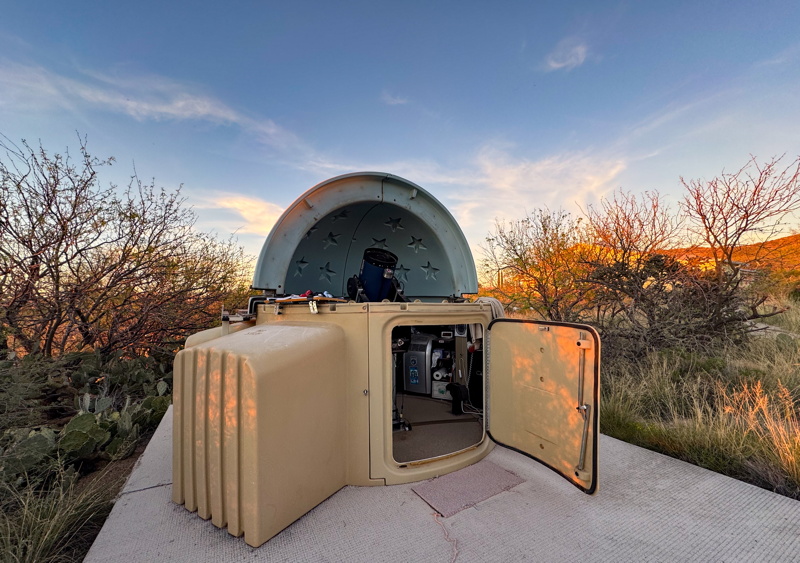
1837 MST: Sunset.
1844 MST: LX600 ON, StarLock OFF, High Precision OFF.
Viewed the planet Venus, 102X.
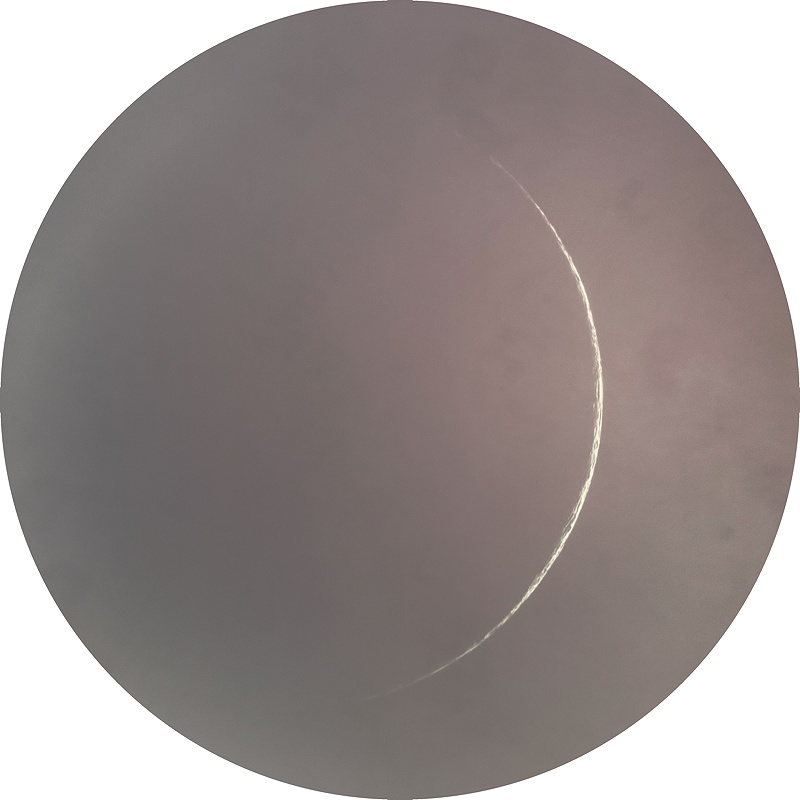
Viewed a very thin crescent Moon, 102X and 81X. Then attached the LiDAR Cover on the iPhone 15 Pro Max and mounted the phone on the 2" 30mm eyepiece using a 3-axis adapter.
1857 MST: Took this image of the 24 hour 34 minutes old Moon, afocal 81X, using the Camera app (1X lens).
1913 MST: Venus and the cresent Moon with faint Earthshine visible, iPhone, Camera app (5X lens).
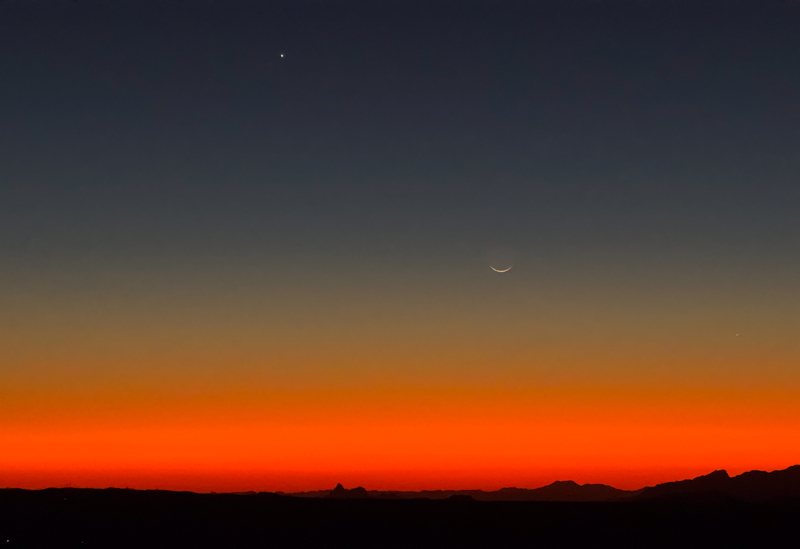
This is not the youngest Moon I have observed. My personal record is a 13h48m Moon.
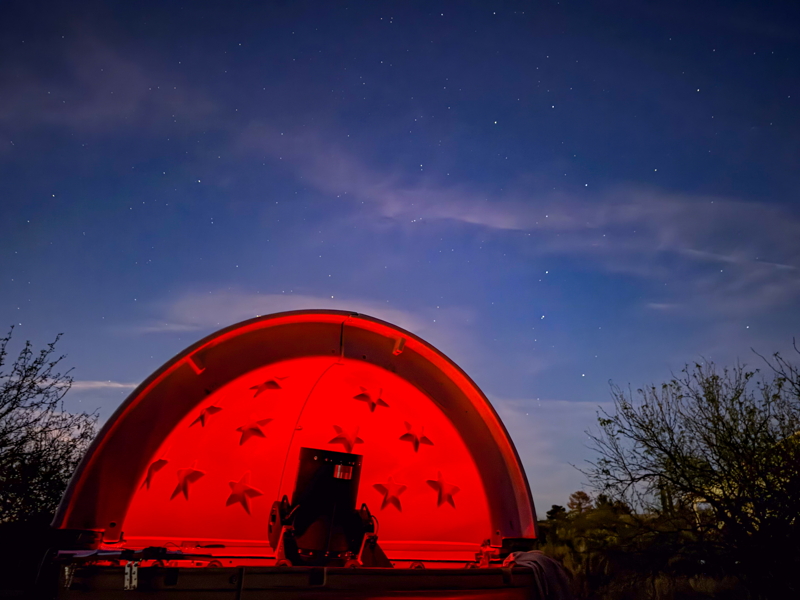
1922 MST: While relaxing on the patio bench I took this iPhone photo (Night Mode, 3 seconds, 1X lens) showing some of the clouds in the sky. The Big Dipper is to the right of the dome.
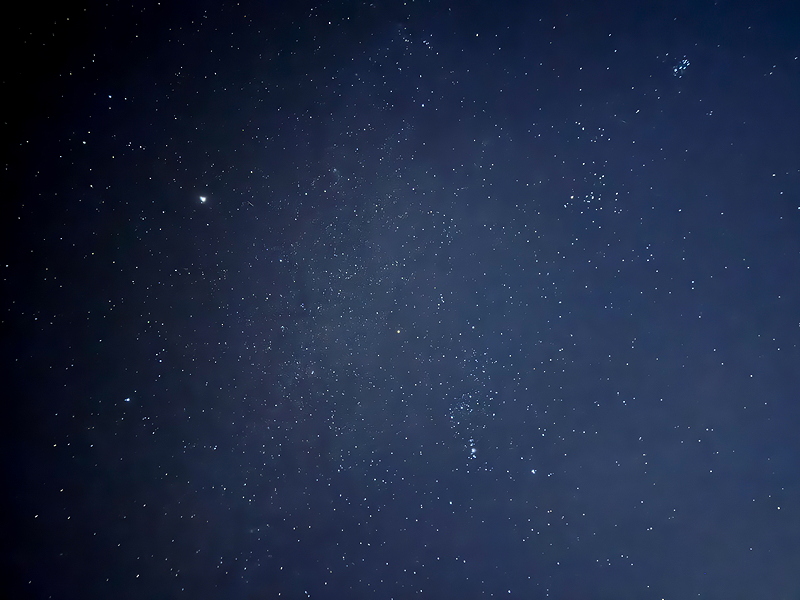
1935 MST: This iPhone photo (Night Mode, 10 seconds, 1X lens, handheld) shows Jupiter in the constellation of Gemini (upper left), the constellation of Orion (center), and the Hyades and Pleiades star clusters (upper right). The "Winter Milky Way" is visible running vertically just to the left of Orion.
1940 MST: Back in the observatory. Viewed M42 (Orion Nebula), 81X and 102X. The view at 81X was very nice.
Due to the clouds, I decided to end the session.
1946 MST: LX600 OFF.
|
Close: Thursday, 19 March 2026, 1954 MST Temperature: 77°F |
Session Length: 1h 35m Conditions: Partly cloudy |
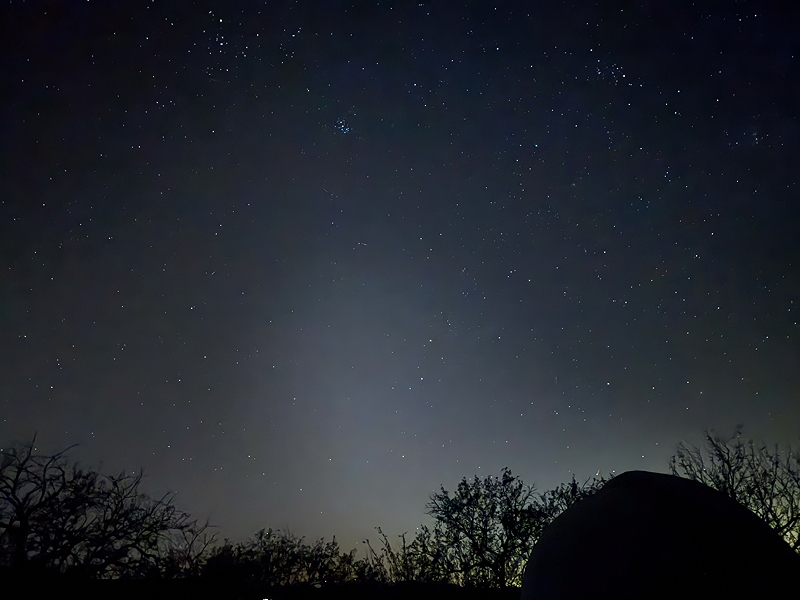
When I stepped outside of the observatory I saw that the Zodiacal Light was very bright in the western sky.
1954 MST: Zodiacal Light, iPhone Camera app (Night Mode, 3 seconds, 1X lens, handheld). The Pleiades is at the top, just above the triangular shaped Zodiacal Light.
Comments are welcome using Email. Please read the Email Etiquette guidance.
Cassiopeia Observatory Home Page

Copyright ©2026 Michael L. Weasner / mweasner@mac.com.
URL = http://www.weasner.com/co/Reports/2026/03/20/index.html