

Our Moon
Posted: 27 March 2026
|
Open: Thursday, 26 March 2026, 1822 MST Temperature: 82°F |
Session: 2123 Conditions: Clear |
Equipment:
12" f/8 LX600 w/StarLock
2" 24mm UWA eyepiece
2" 4X Powermate
Focal reducer
Camera:
D850 DSLR
1827 MST: LX600 ON, StarLock OFF, High Precision OFF.
Viewed the planet Venus, 102X and 406X. The slight gibbous phase was easily seen at 406X.
1841 MST: Dome OFF.
1842 MST: Sunset.
Did some lunar observing, 102X and 406X. The Straight Wall and the crater Plato were particular nice at 406X.
Prepared the D850 DSLR camera for lunar imaging.
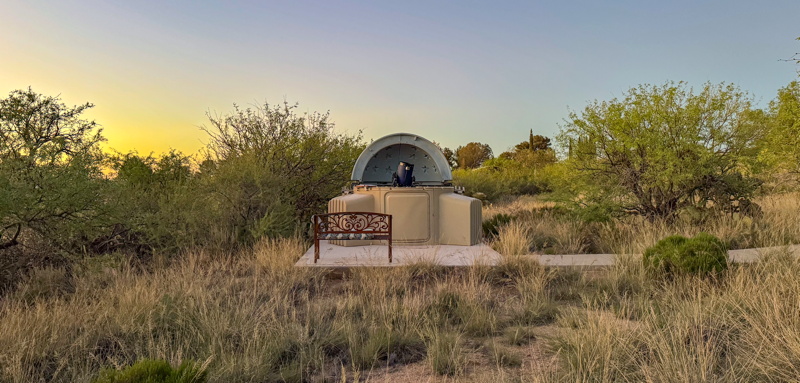
1856 MST: Left the observatory and took this iPhone 15 Pro Max photo of Cassiopeia Observatory.
Then relaxed on the observatory patio bench.
1920 MST: Back in the observatory. Mounted the D850 camera at the 12" telescope prime focus + focal reducer.
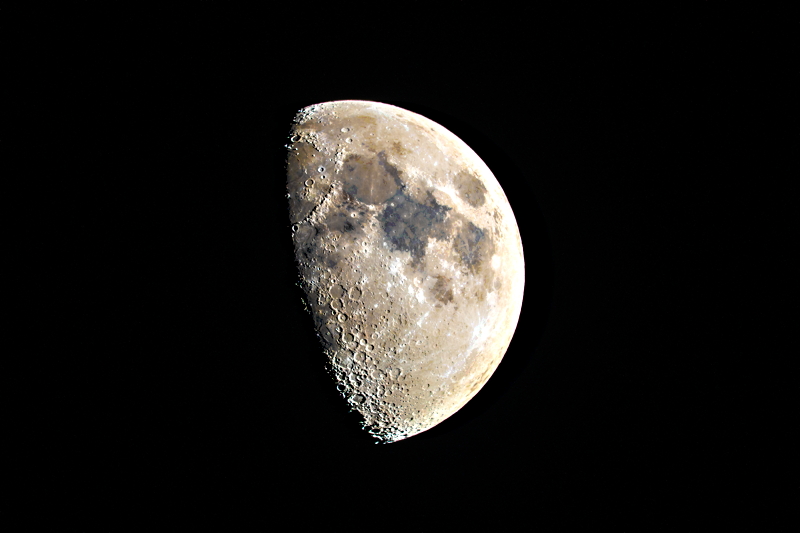
1927 MST: Our Moon in a waxing gibbous phase, prime focus + focal reducer, 1/320sec, ISO 200. The image was high saturated in post-processing to bring out mineral colors on the lunar surface.
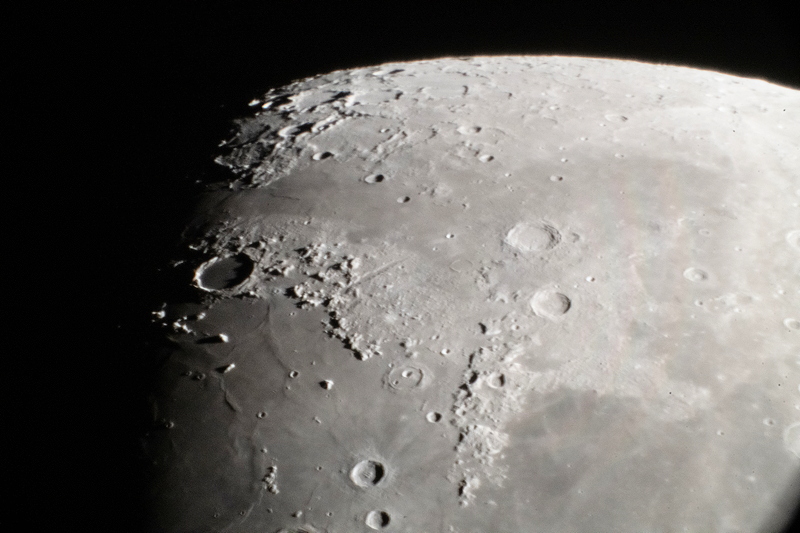
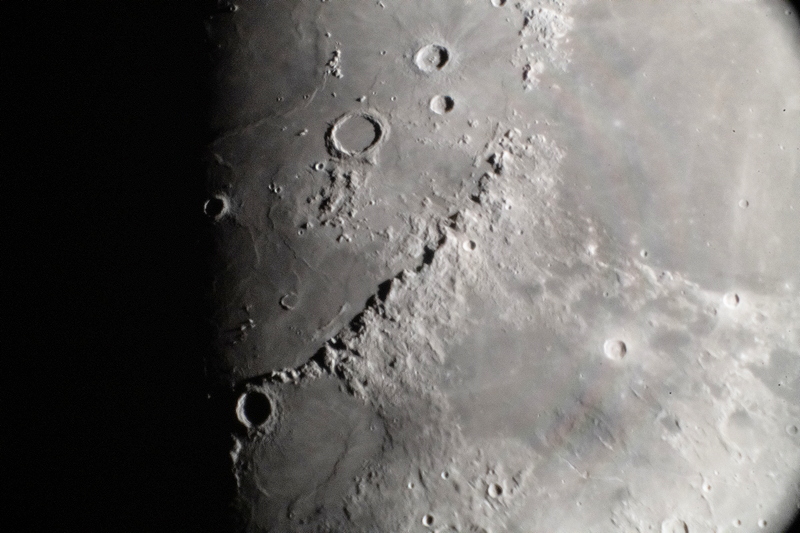
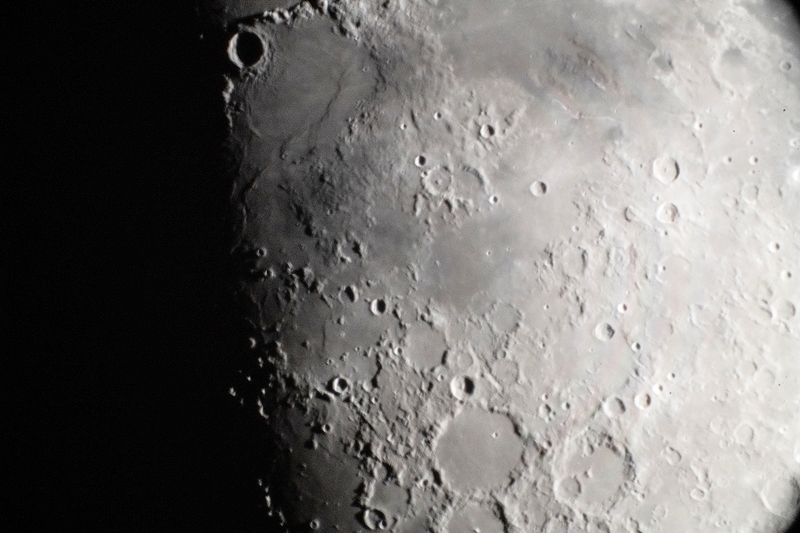
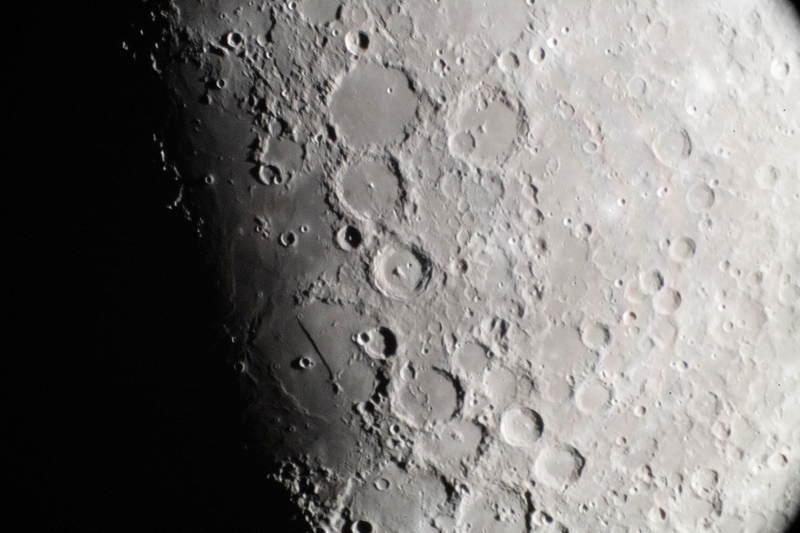
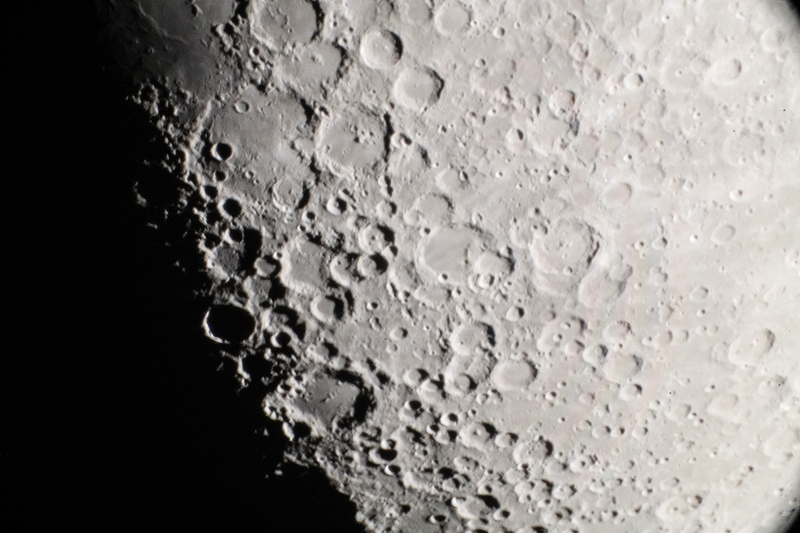
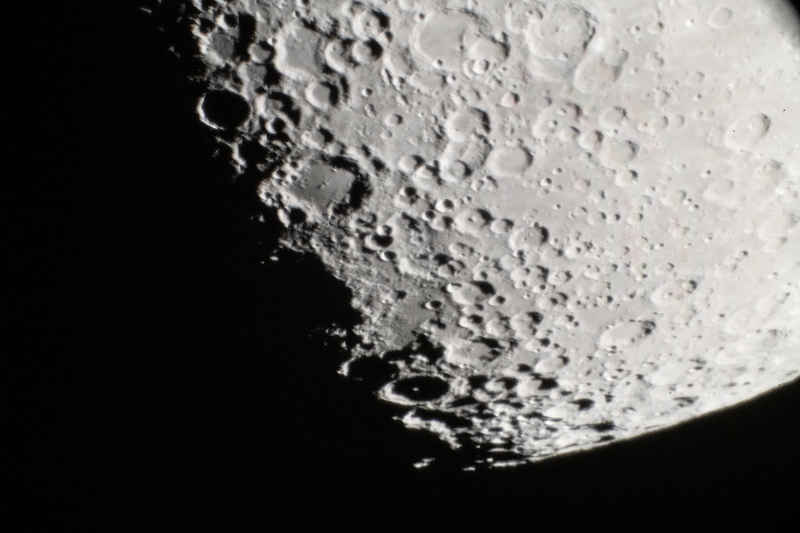
Next, I mounted the D850 camera at prime focus + 4X Powermate. Took these images, 1/200sec, ISO 3200. The crater Plato is at the left near the lunar terminator in the top image. The Straight Wall is visible near the bottom of the fourth image.
Removed the camera and viewed the planet Jupiter, 406X and 102X. The four Galilean Moons were visible.
1948 MST: LX600 OFF.
1955 MST: Dome ON.
|
Close: Thursday, 26 March 2026, 2000 MST Temperature: 71°F |
Session Length: 1h 38m Conditions: Clear |
Comments are welcome using Email. Please read the Email Etiquette guidance.
Cassiopeia Observatory Home Page

Copyright ©2026 Michael L. Weasner / mweasner@mac.com.
URL = http://www.weasner.com/co/Reports/2026/03/27/index.html