
Moon, Supernova 2026aaiv, Ring & Dumbbell Nebulae
Posted: 19 September 2026
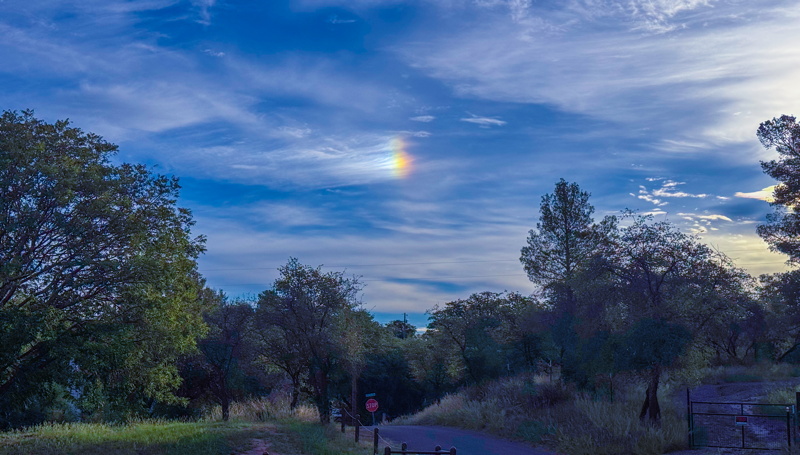
Cloudy skies returned on Wednesday, 2 September 2026. Thursday morning, 3 September, had a brief light rain (0.01"). Monday morning, 7 September, had a brief light rain (0.01"). Tuesday morning, 8 September, I saw this nice sundog in the eastern sky during a bike ride.
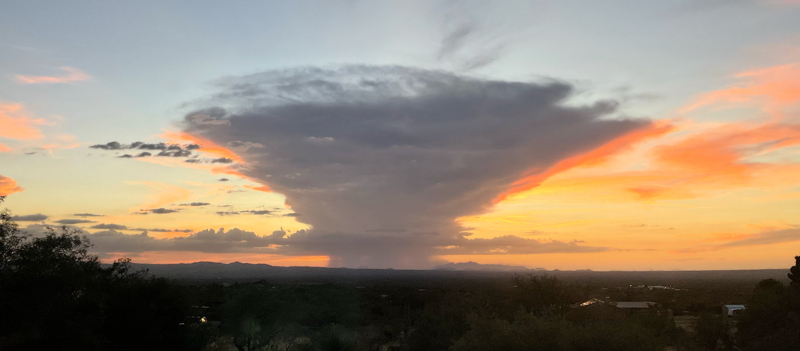
Friday evening, 11 September, there was this storm to the west at sunset.
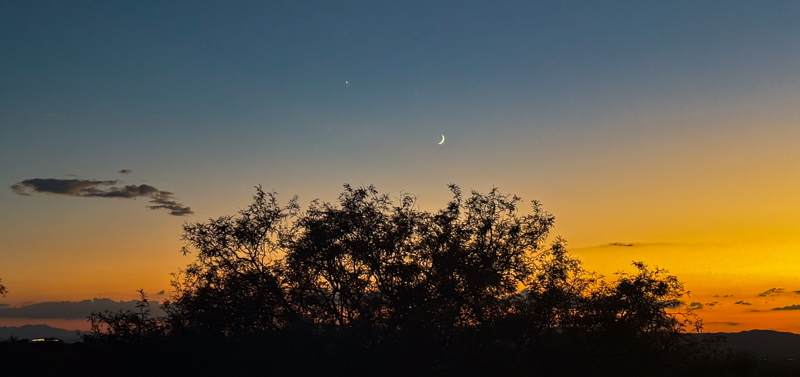
Sunday evening, 13 September, with clouds in the sky and storms in the area, I took this iPhone photo of Venus and the crescent Moon.
Wednesday afternoon, 16 September, a nice rainstorm visited Oracle. Received 0.25" rain in 10 minutes! Total for the day was 0.66". The rain continued over night. Total rain for Thursday, 17 September, was 0.57". Friday afternoon, 18 September, with a clear sky in the forecast, I removed the observatory Dome Cover.
|
Open: Friday, 18 September 2026, 1822 MST Temperature: 81°F |
Session: 2153 Conditions: Clear, humid |
Equipment:
12" f/8 LX600 w/StarLock
2" 24mm UWA eyepiece
2" 9mm 100° eyepiece
1.25" 26mm eyepiece
Focal reducer
Camera:
iPhone 15 Pro Max
D850 DSLR
1828 MST: Sunset. SYNCed observatory clock to WWV time signals.
Recently we had our home and observatory "Firewised" for additional protection from wildfires. An additional 5 feet from the house and observatory was cleared of vegetation and the ground covered so that vegetation will not grow. Many thanks to Todd and his team and Darrell and his team!
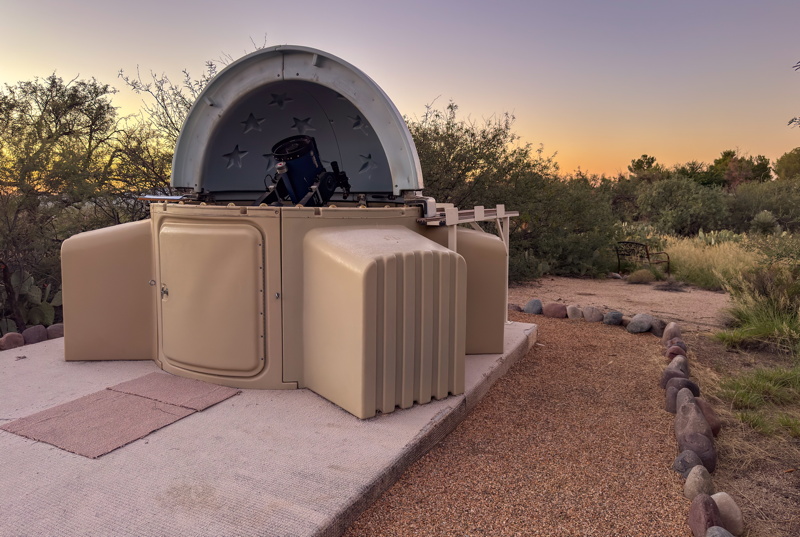
1833 MST: LX600 ON, StarLock OFF, High Precision OFF.
Viewed Venus, 102X and 271X. Took this handheld iPhone 15 Pro Max afocal 271X image showing the crescent phase of Venus using the NightCap Camera v10.1 (ISO 81, 1/1800sec, 1X lens).
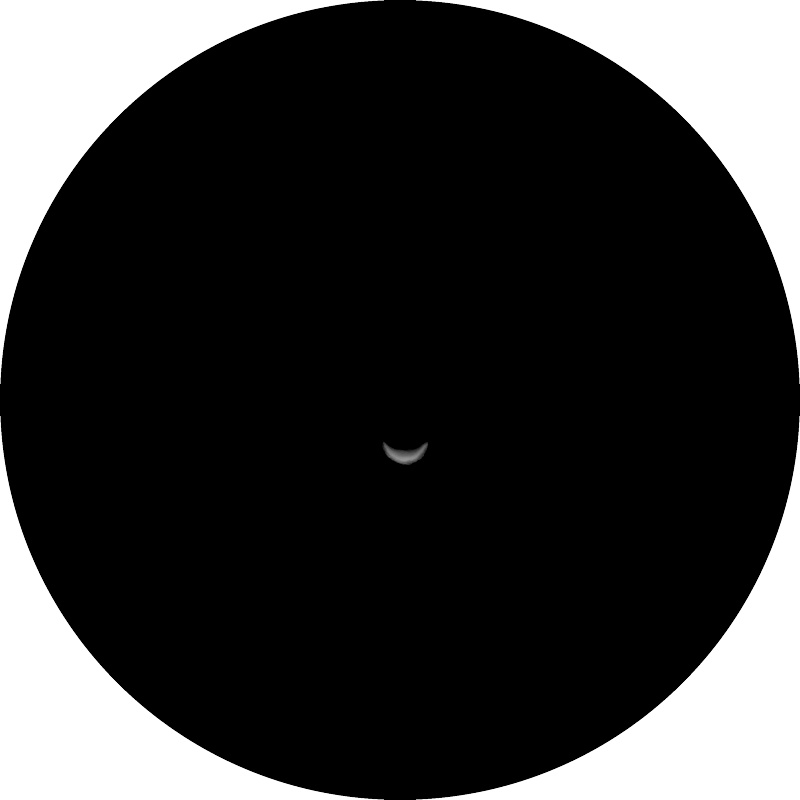
Weather permitting I hope to get better images of the crescent Venus before it gets too low in the sky.
Then viewed the First Quarter Moon, 102X. Took these handheld afocal 102X images of the Moon using the Camera app and NightCap Camera for comparison.
Camera app (1X lens)
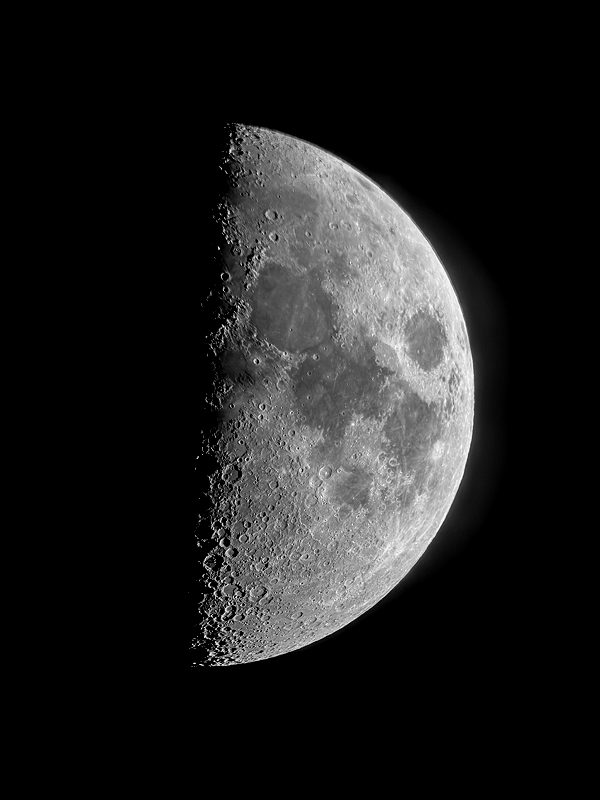
NightCap Camera (ISO 55, 1/2500sec, 1X lens)
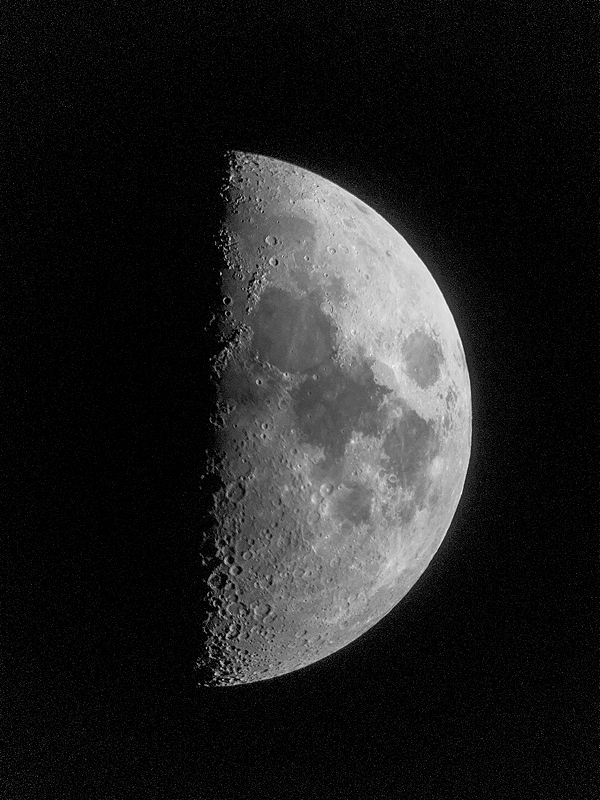
Viewed the Moon, 271X. Took these handheld afocal 271X images of the Moon using the Camera app (1X lens).
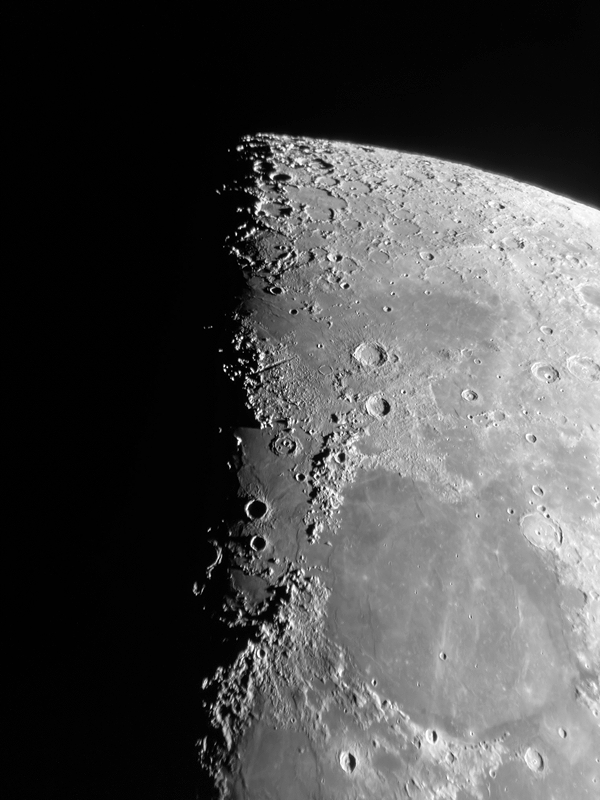
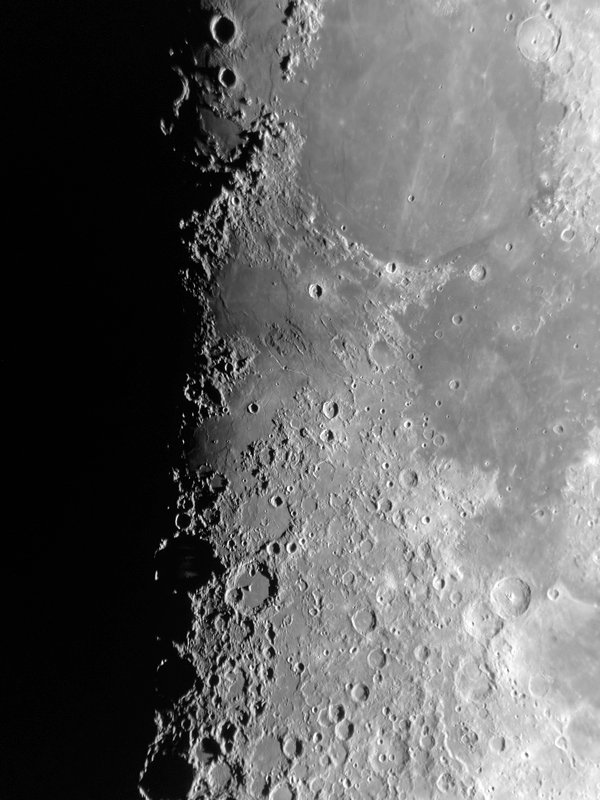
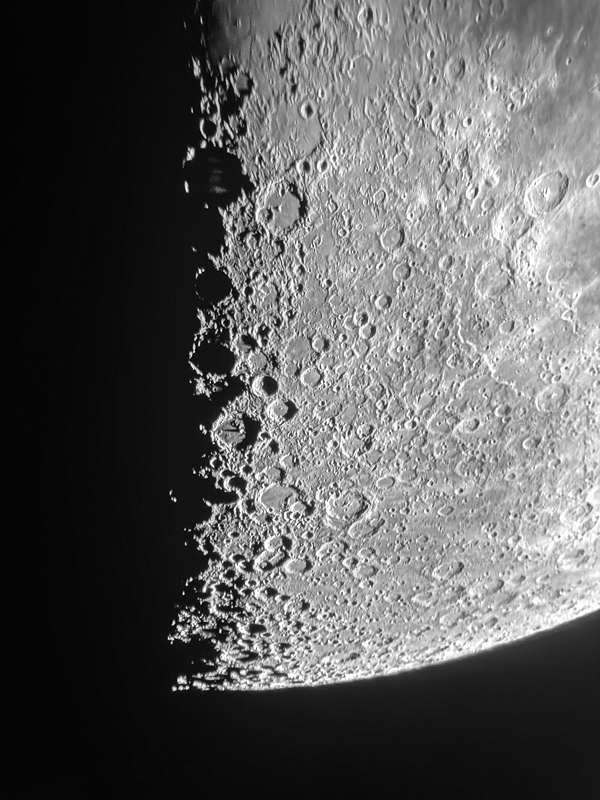
SYNCed the LX600 on the star Altair. Prepared the D850 DSLR for imaging.
1910 MST: High Precision ON.
Viewed NGC7331 (galaxy), 102X. The galaxy was faintly visible in the bright moonlit sky.
1913 MST: Relaxed on the observatory patio bench while waiting for the twilight sky to get darker.
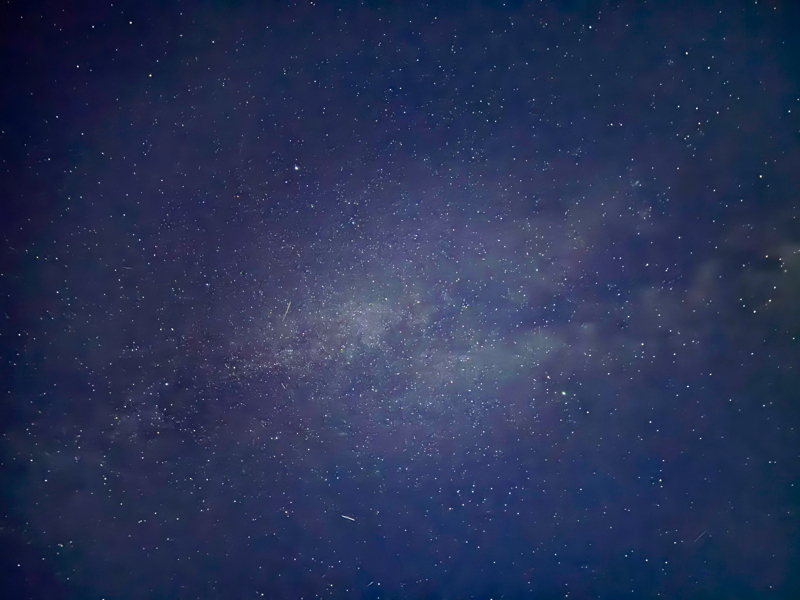
1920 MST: Took this handheld iPhone photo of the Summer Triangle showing the Milky Way in the bright moonlit sky. Several satellites are visible in the image. Used the Camera app (Night Mode, 10 seconds, 1X lens).
1942 MST: Back in the observatory. Mounted the D850 DSLR at prime focus, focused on the star Altair, and locked the 12" primary mirror. Slewed to NGC7331 (galaxy).
1949 MST: StarLock ON.
This is a StarLock autoguided image of NGC7331 showing Supernova 2026aaiv (3 minutes, ISO 6400).
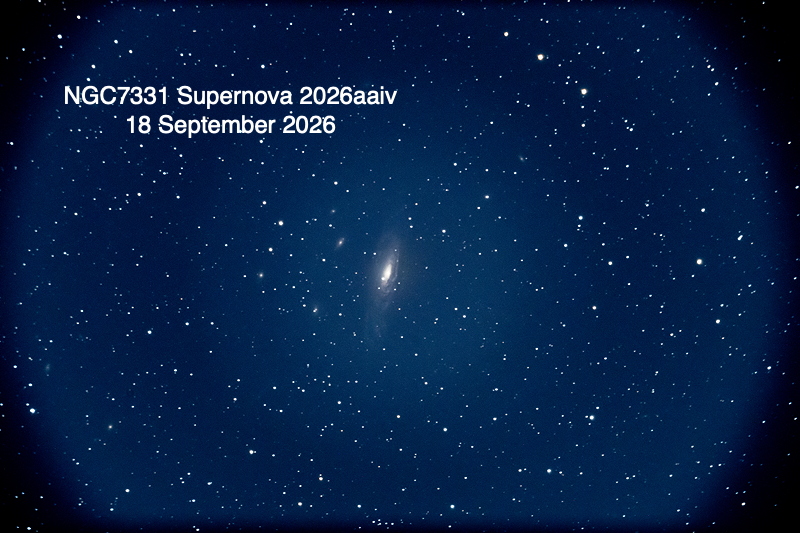
Mouseover or tap on image for label
2012 MST: High Precision OFF. Viewed NGC7331, 102X. Supernova 2026aaiv was easily seen in the moonlit sky.
Mounted the D850 DSLR at prime focus + focal reducer, focused on Altair, and locked the mirror.
2019 MST: Wi-Fi ON. Used SkySafari 7 Pro to GOTO Asteroid 52665 Brianmay. I hoped to image it, but at Mag. +19.3 I expected to fail to capture it in the moonlit sky. I took two image 5 minutes, ISO 6400, images an hour apart to show movement of the asteroid. Unfortunately, the sky was too bright to get the faint asteroid. I hope to try again once the Moon is no longer a factor.
During the one hour between imaging the asteroid, I relaxed on the patio bench.
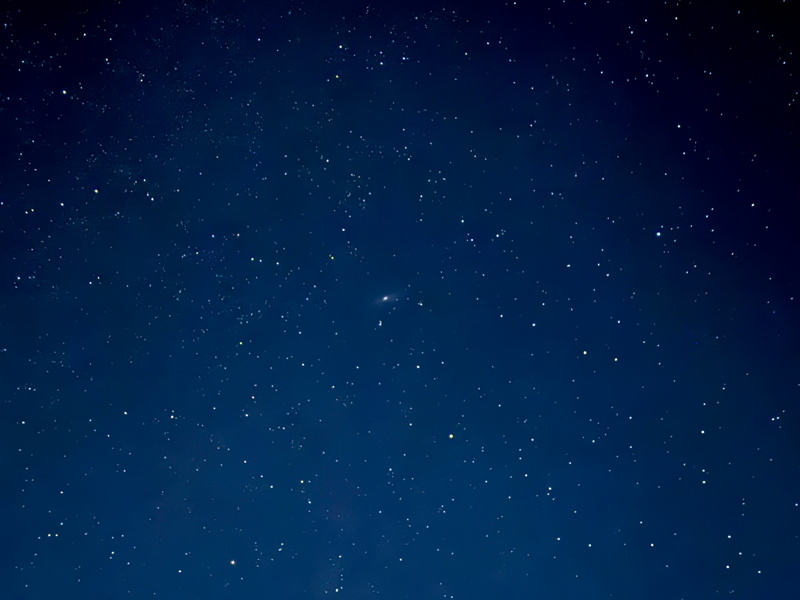
2040 MST: Took this handheld iPhone photo of M31 (Andromeda Galaxy) using the Camera app (Night Mode, 10 seconds, 2X lens).
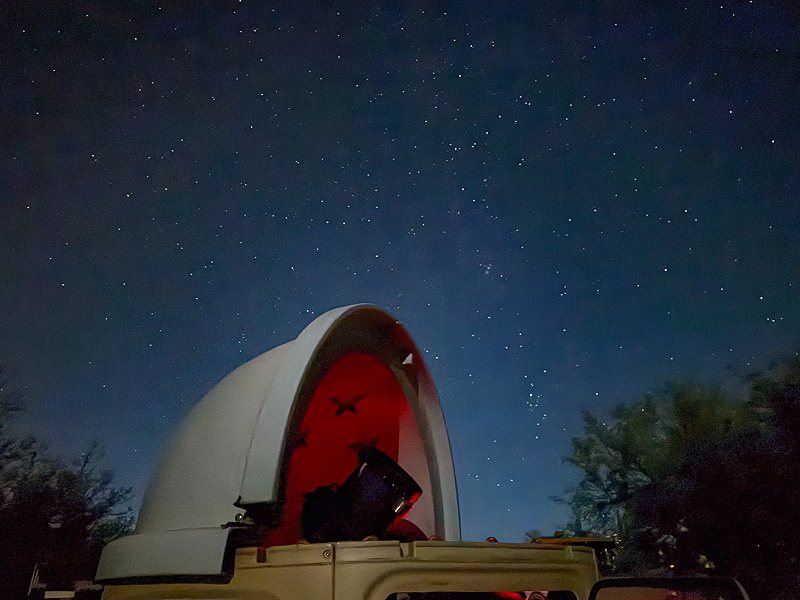
2100 MST: iPhone photo of the constellation of Cassiopeia over Cassiopeia Observatory (Night Mode, 3 seconds, 1X lens). The constellation of Perseus is low and right of the dome. Inbetween Cassiopeia and Perseus the Double Cluster (open star clusters) is visible in the photo.
2121 MST: Back in the observatory. Viewed M57 (Ring Nebula), 102X and 94X.
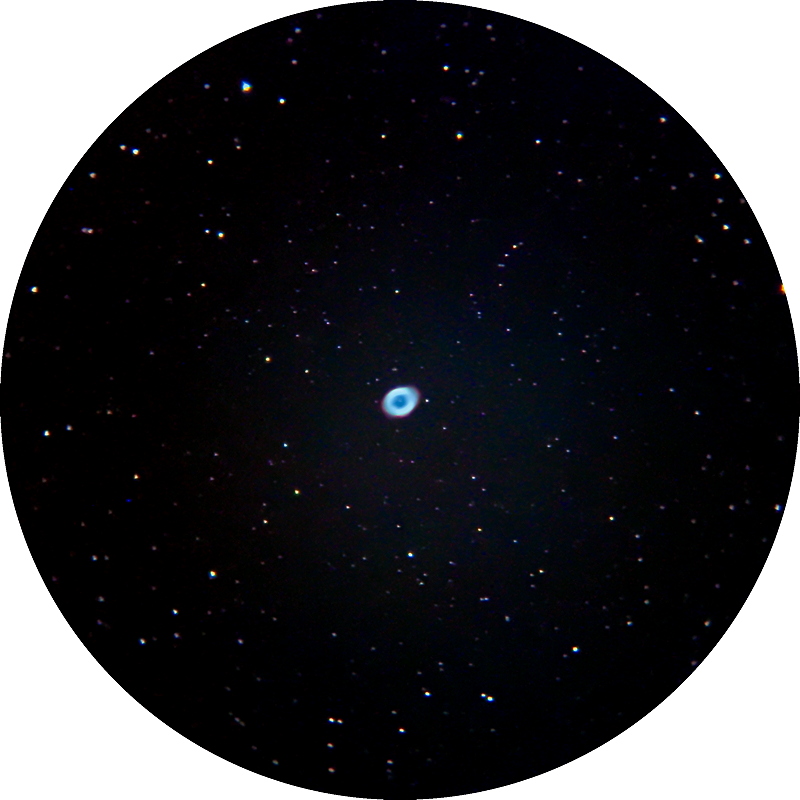
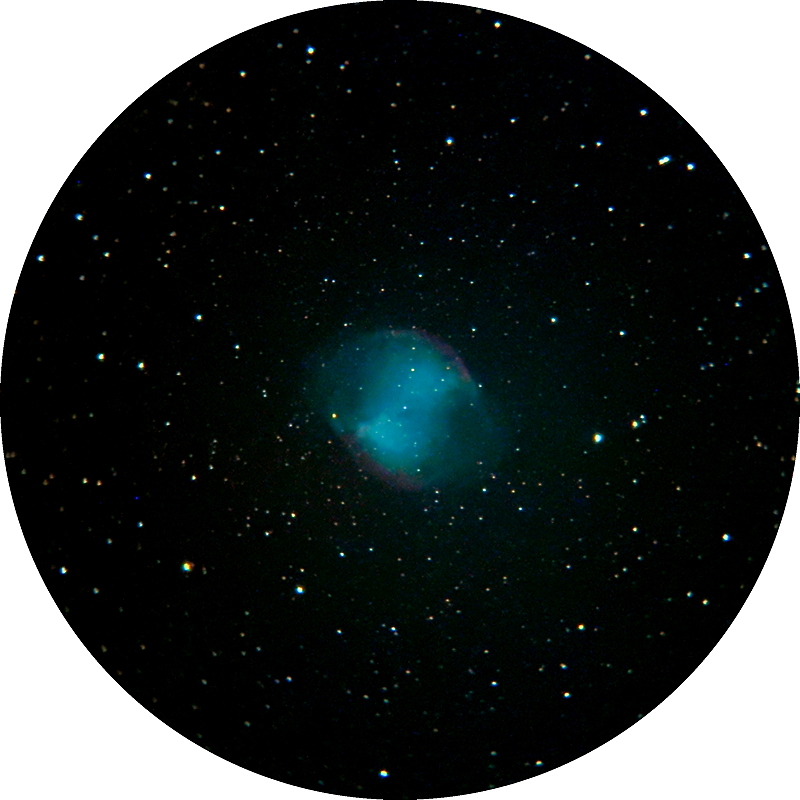
Attached the LiDAR Cover on the iPhone and mounted the phone on the 26mm eyepiece using the 3-axis adapter. Took these images of M57 (Ring Nebula) and M27 (Dumbbell Nebula) using the Camera app and NightCap Camera for comparison.
Ring Nebula, Camera app
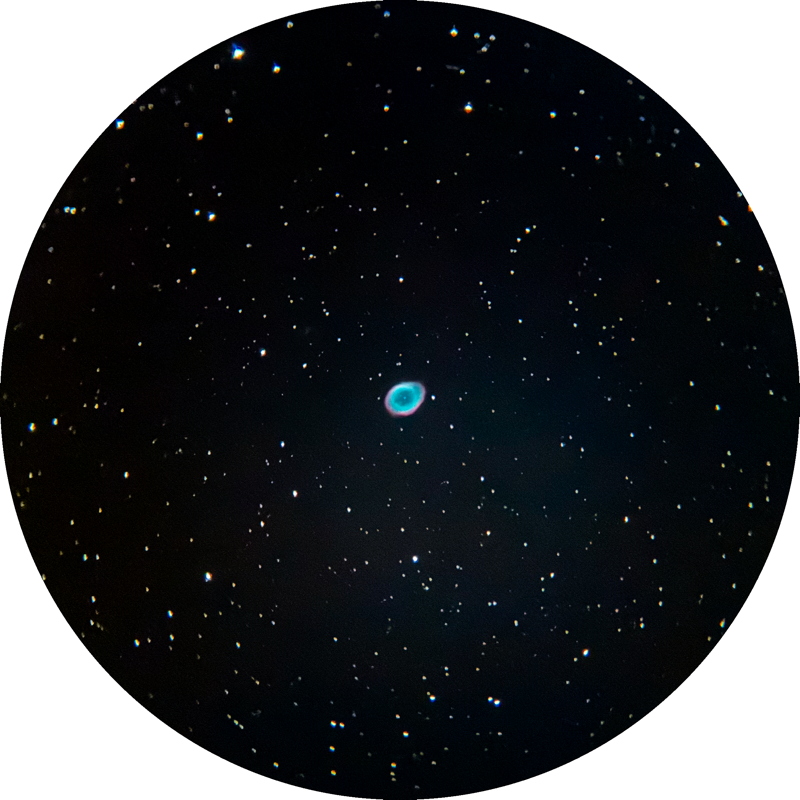
Ring Nebula, NightCap Camera (ISO 18839, 1sec, 1 minute, 1X lens)
Dumbbell Nebula, NightCap Camera (ISO 18514, 1sec, 1 minute, 1X lens)
Dumbbell Nebula, Camera app
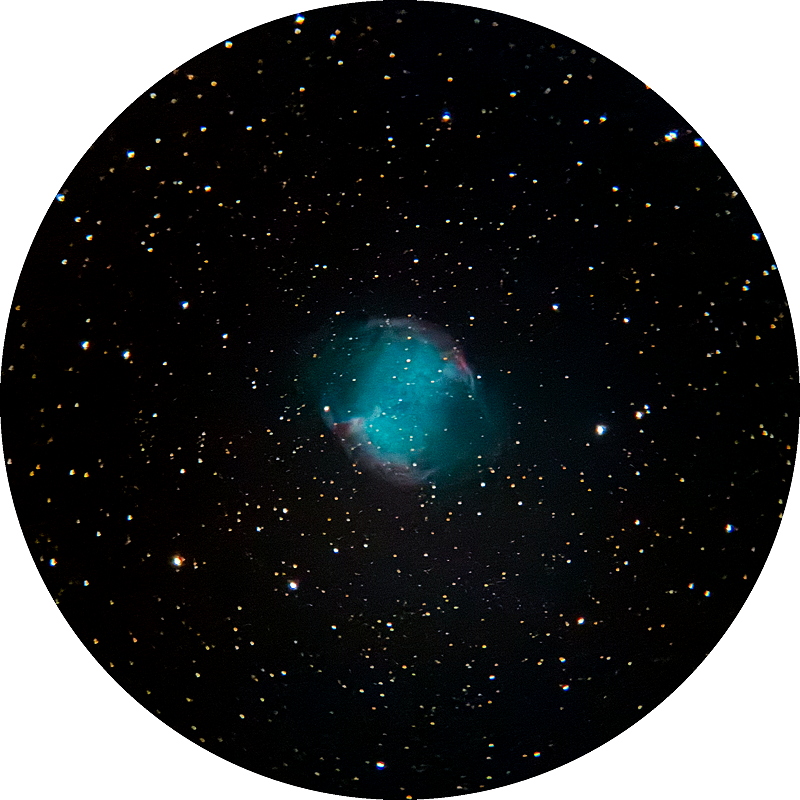
All the NightCap Camera images used the "AI mode" of exposure settings. I did that as a good comparison with the automatic Night Mode of the Camera app. I will continue testing NightCap Camera v10 on future sessions and will try many different exposure settings.
Viewed M27 (Dumbbell Nebula), 94X and 102X.
Viewed Saturn, 102X.
2215 MST: LX600 OFF.
Even with the bright moonlit sky, it was fun being back in the observatory. Monsoon Season 2026 has been the worse for astronomy since moving here in 2009. Poor sky conditions are expected to return next week.
|
Close: Friday, 18 September 2026, 2230 MST Temperature: 73°F |
Session Length: 4h 08m Conditions: Clear, humid |
Comments are welcome using Email. Please read the Email Etiquette guidance.
Cassiopeia Observatory Home Page

Copyright ©2026 Michael L. Weasner / mweasner@mac.com.
URL = http://www.weasner.com/co/Reports/2026/09/19/index.html