
iPhone Supernova 2026aaiv in NGC7331
Posted: 2 October 2026
Late Monday night, 28 September 2027, the remnants of Pacific Hurricanes Odalys and Polo arrived. Rain continued on Tuesday, 29 September, with a total precipitation of 2.07". Final rain occurred early Wednesday morning, 30 September, with an additional precipitation of 0.18". Thursday morning, 1 October, with clear nights in the forecasts (!) I removed the Dome Cover.
|
Open: Thursday, 1 October 2026, 1749 MST Temperature: 88°F |
Session: 2155 Conditions: Clear, humid |
Equipment:
12" f/8 LX600 w/StarLock
2" 24mm UWA eyepiece
Focal reducer
1.25" 26mm eyepiece
Camera:
D850 DSLR
iPhone 15 Pro Max
SYNCed observatory clock to WWV time signals.
1800 MST: LX600 ON, StarLock OFF, High Precision OFF.
Prepared D850 DSLR for imaging.
1810 MST: Sunset.
Viewed Venus, 102X. A nice thin crescent was seen, but the planet was too low in the western sky for good viewing.
1818 MST: Relaxed on the observatory patio bench while waiting for the sky to become darker.
1900 MST: Back in the observatory. SYNCed the AutoStar on the star Antares.
1902 MST: Wi-Fi ON. Used SkySafari 7 Pro on the iPhone to GOTO globular clusters for my Milky Way Globular Clusters Project. Viewed Haute Provence 1 and NGC6380, 102X. Both were challenging objects to the faintness and being low in the southwestern sky. I plan to image them and some other globular clusters on my next session.
Mounted the D850 DSLR at prime focus + focal reducer, focused on the star Antares, and locked the telescope primary mirror. Slewed to Asteroid 21057 Garikisraelian, Mag. +20.2, low in the southwestern sky at the end of Astronomical Twilight. I tried imaging the faint asteroid during a one hour interval. Unfortunately, as expected, it was lost in the muck and Milky Way due to its low altitude in the sky and faintness.
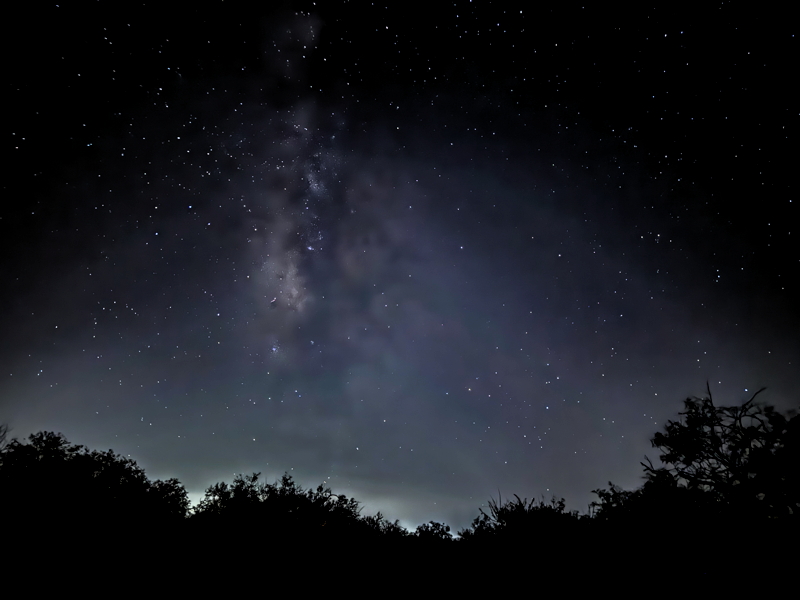
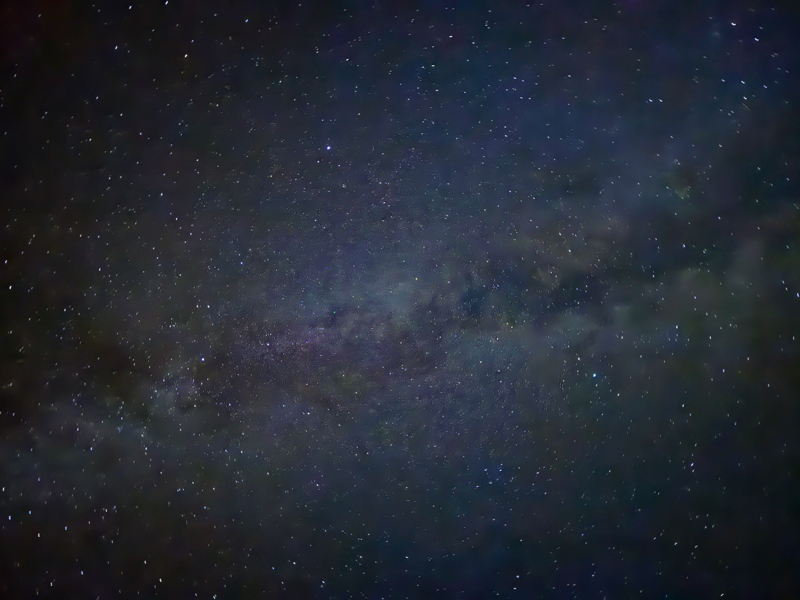
While asteroid imaging, I relaxed on the observatory bench. Took these handheld iPhone 15 Pro Max photographs of the Milky Way (Night Mode, 10 seconds, 1X lens).
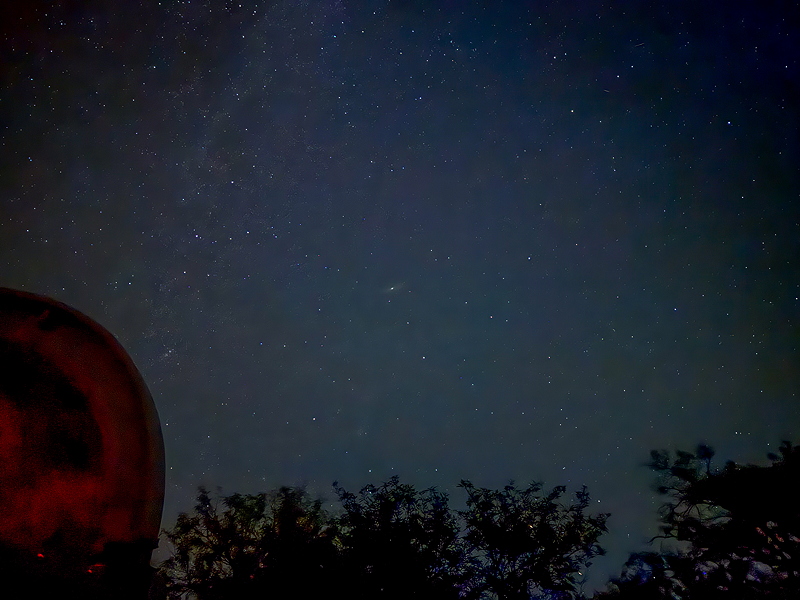
At the center of this handheld iPhone 15 Pro Max photograph is the Andromeda Galaxy (Night Mode, 10 seconds, 1X lens).
2015 MST: Back in the observatory. Took the final asteroid image.
I then viewed NGC7331 (galaxy), 102X and 94X. Supernova 2026aaiv was still visible. I attached the LiDAR Cover on the iPhone and mounted the phone on the 26mm eyepiece. Took this Starlock autoguided afocal 94X image of the galaxy and supernova.
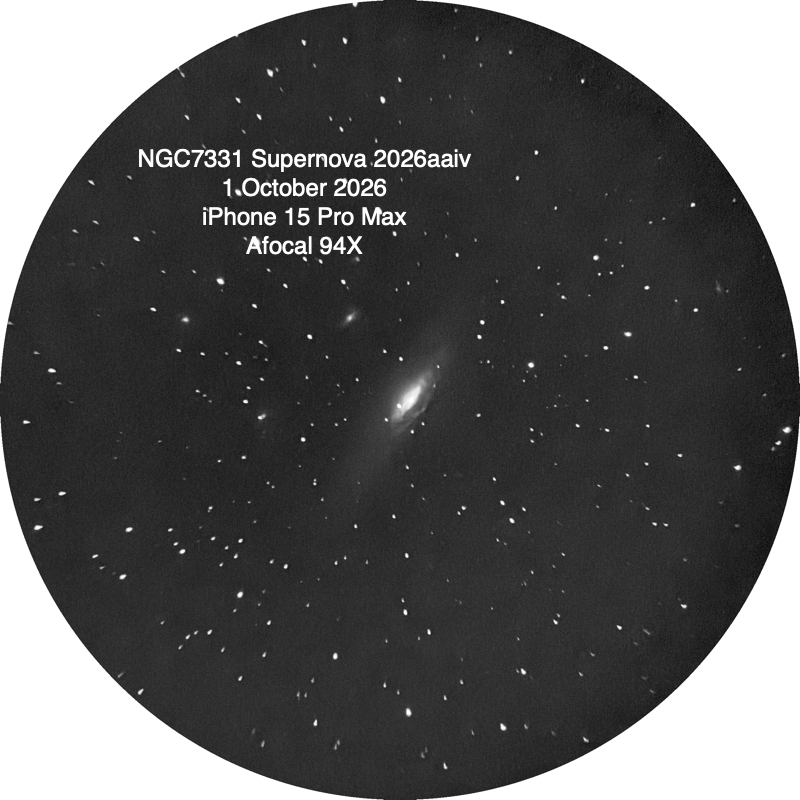
Mouseover or tap on image
During this session I did some beta testing of a new version of an iPhone astrophotography app.
Lastly, viewed Saturn, 94X and 102X.
2131 MST: LX600 OFF.
2138 MST: Took a sky quality reading. With the high humidity the sky was bright.
|
Close: Thursday, 1 October 2026, 2141 MST Temperature: 68°F |
Session Length: 3h 52m Conditions: Clear, humid, SQM 20.84 |
Comments are welcome using Email. Please read the Email Etiquette guidance.
Cassiopeia Observatory Home Page

Copyright ©2026 Michael L. Weasner / mweasner@mac.com.
URL = http://www.weasner.com/co/Reports/2026/10/02/index.html