

Crescent Moon, Globular Cluster, Saturn & Moons
Posted: 12 November 2026
|
Open: Wednesday, 11 November 2026, 1805 MST Temperature: 74°F |
Session: 2164 Conditions: Clear |
Equipment:
12" f/8 LX600 w/StarLock
2" 24mm UWA eyepiece
2" 50mm eyepiece
Camera:
D850 DSLR
1809 MST: LX600 ON, StarLock OFF, High Precision OFF.
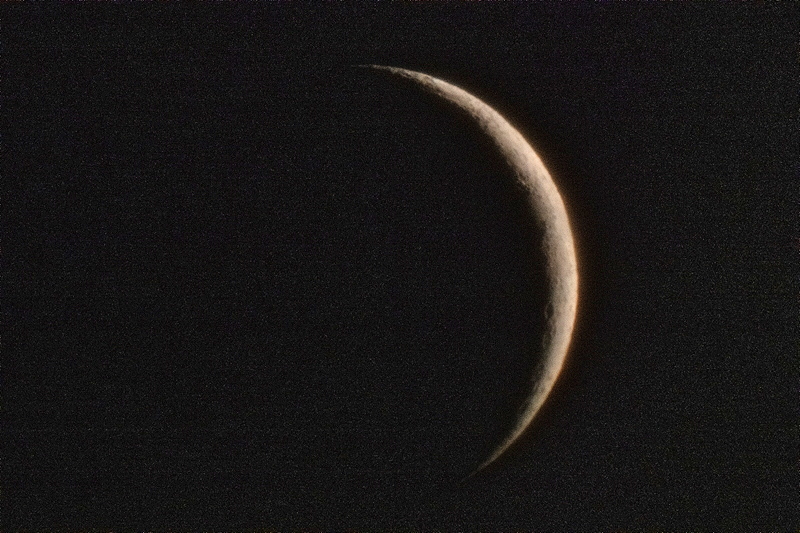
Viewed the crescent Moon, 102X, very low in the southwestern sky and through a tree.
Prepared the D850 DSLR for imaging. Mounted the camera at prime focus.
1830 MST: Crescent Moon, 1/200sec, ISO 1600, very low and through a tree.
Focused and SYNCed on the star Altair, locked mirror.
1837 MST: High Precision ON.
Slewed to NGC7492 (globular cluster).
1841 MST: StarLock ON.
Seeing and autoguiding were terrible, but I managed to get this StarLock autoguided image of NGC7492, 1 minute, ISO 6400.
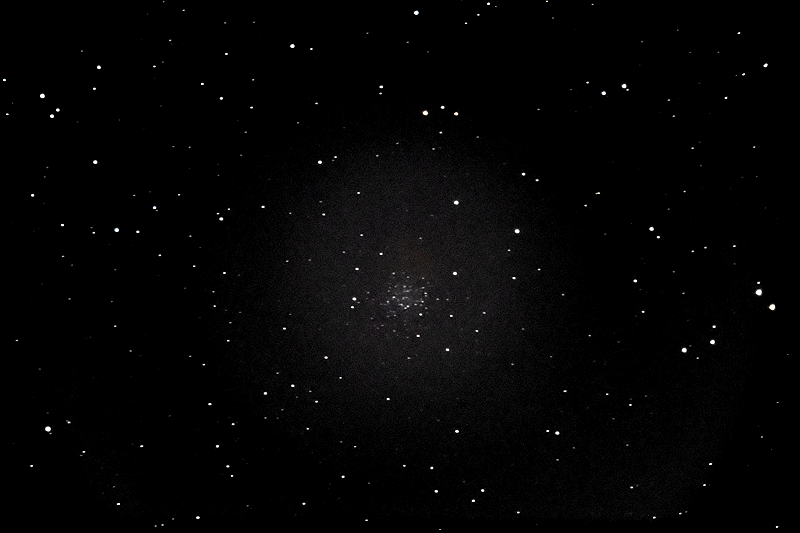
This is the current status of my Milky Way Globular Clusters Project.

The remaining 20 globular clusters visible from Cassiopeia Observatory will have to wait until they rise in 2027.
1855 MST: StarLock OFF, High Precision OFF.
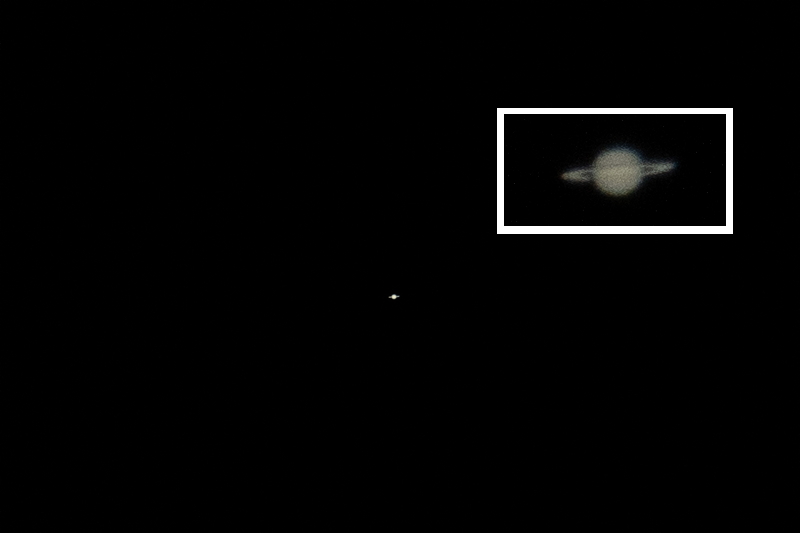
Slewed to Saturn and took this prime focus image, 1/200sec, ISO 1600. The inset shows a magnified view.
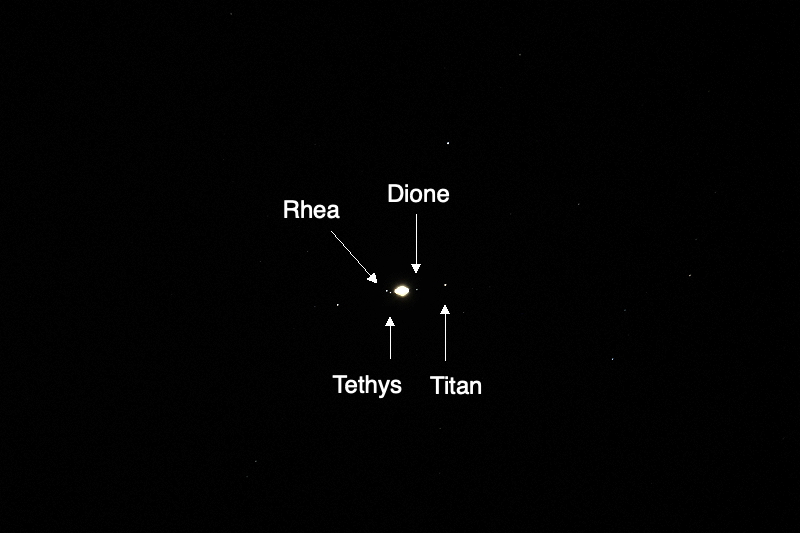
This longer exposure, 1 second, ISO 1600, shows four of the moons of Saturn.
Viewed Saturn, 102X.
Viewed M45 (Pleiades), 102X and 49X.
Viewed the Double Cluster, 49X and 102X.
1916 MST: LX600 OFF.
1924 MST: Took a Sky Quality reading.
|
Close: Wednesday, 11 November 2026, 1926 MST Temperature: 64°F |
Session Length: 1h 21m Conditions: Clear, SQM 20.78 |
Comments are welcome using Email. Please read the Email Etiquette guidance.
Cassiopeia Observatory Home Page

Copyright ©2026 Michael L. Weasner / mweasner@mac.com.
URL = https://www.weasner.com/co/Reports/2026/11/12/index.html