
Eridanus Globular Cluster, Leo I Dwarf Galaxy
Posted: 13 March 2026
|
Open: Thursday, 12 March 2026, 1818 MST Temperature: 85°F |
Session: 2117 Conditions: Clear |
Equipment:
12" f/8 LX600 w/StarLock
2" 24mm UWA eyepiece
Camera:
D850 DSLR
1823 MST: LX600 ON, StarLock OFF, High Precision OFF.
Viewed Venus, 102X
1832 MST: Sunset.
Prepared the D850 DSLR camera for imaging.
1837 MST: Relaxed on the observatory patio bench.
1846 MST: Back in the observatory for a quick look at Jupiter, 102X. Three Galilean Moons were visible. Then returned to the bench to watch the stars come out.
1930 MST: Back in the observatory. Mounted the D850 camera at prime focus, focused on the star Sirius, and locked the primary mirror.
1937 MST: Wi-Fi ON.
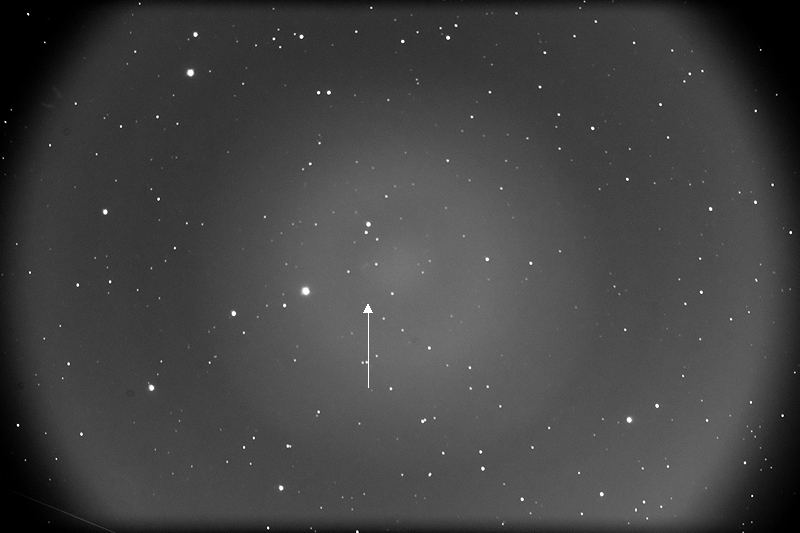
Used SkySafari 7 Pro on the iPhone to GOTO Eridanus (globular cluster; Mag. +14.7), low in the Tucson skyglow in the southwest.
1940 MST: StarLock ON.
Eridanus (globular cluster), StarLock autoguided, 5 minutes, ISO 6400. Lots of post-processing to show the faint globular cluster.
2000 MST: Dome OFF (onto the PZT).
I then tried to image Koposov 2 (globular cluster, Mag. +17.6), but I think there was a pointing error. Will try again on another session.
2018 MST: Dome ON.
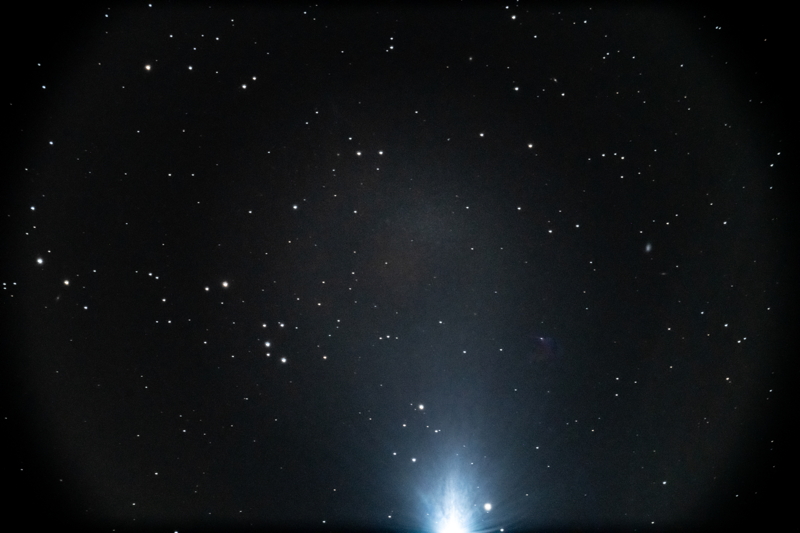
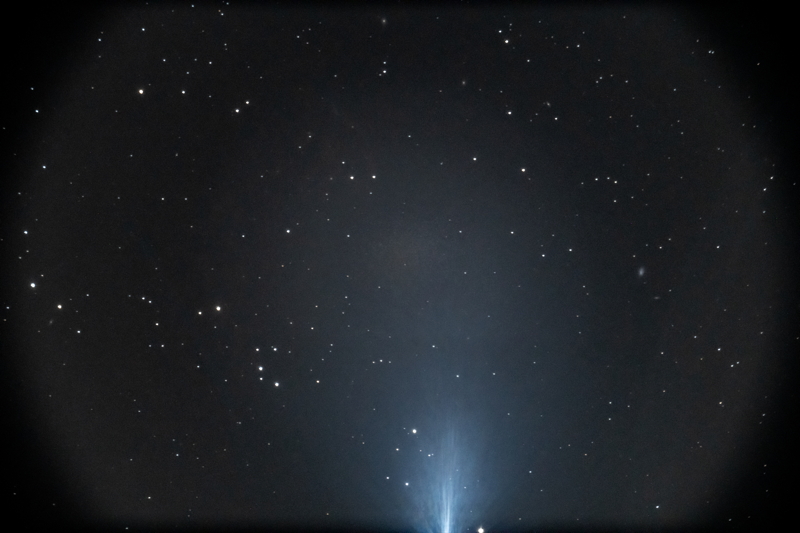
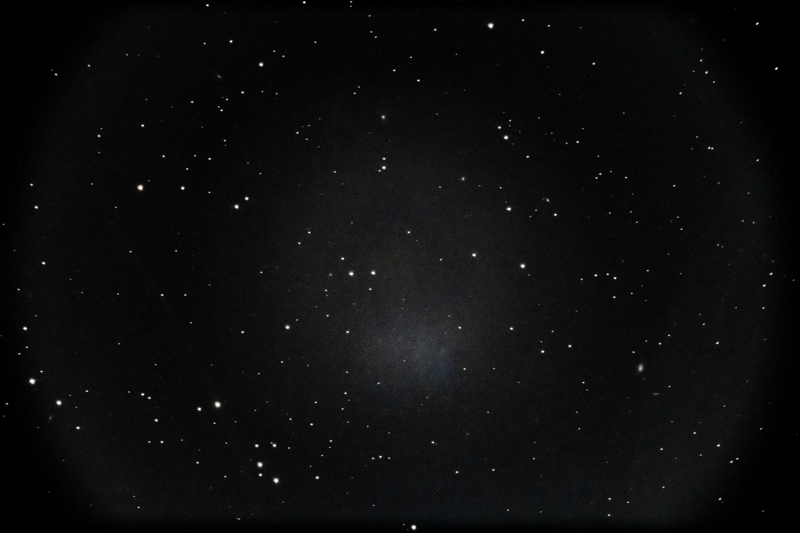
Using SkySafari on the phone I slewed to Leo I (faint dwarf galaxy). The galaxy appears about 20' from the bright star Regulus, as seen in these StarLock autoguided, 2 minutes, ISO 6400, images.
2035 MST: StarLock OFF, Wi-Fi OFF.
Viewed Leo I (dwarf galaxy), 102X.
2046 MST: LX600 OFF.
2054 MST: Took a Sky Quality reading and reported the result to Globe at Night.
|
Close: Thursday, 12 March 2026, 2057 MST Temperature: 66°F |
Session Length: 2h 39m Conditions: Clear, SQM 20.90 |
Comments are welcome using Email. Please read the Email Etiquette guidance.
Cassiopeia Observatory Home Page

Copyright ©2026 Michael L. Weasner / mweasner@mac.com.
URL = http://www.weasner.com/co/Reports/2026/03/13/index.html