

Earthshine, Globular Clusters, iPhone Leo I Dwarf Galaxy
Posted: 21 March 2026
|
Open: Friday, 20 March 2026, 1809 MST Temperature: 85°F |
Session: 2120 Conditions: Clear |
Equipment:
12" f/8 LX600 w/StarLock
2" 24mm UWA eyepiece
2" 30mm eyepiece
Focal reducer
Camera:
iPhone 15 Pro Max
D850 DSLR
Prepared the D850 DSLR camera for imaging.
1817 MST: LX600 ON, StarLock OFF, High Precision OFF.
Viewed the crescent Moon, 102X.
1823 MST: Relaxed on the observatory patio bench.
1838 MST: Sunset. Saw the "Green Flash" as the last visible portion of the Sun disappeared behind a distant mountain.
Back in the observatory. I mounted the D850 DSLR at prime focus, but could not get the entire lunar disc in the field-of-view. Switched to using a focal reducer.
1848-1900 MST: Relaxed on the bench.
1907 MST: Dome OFF.
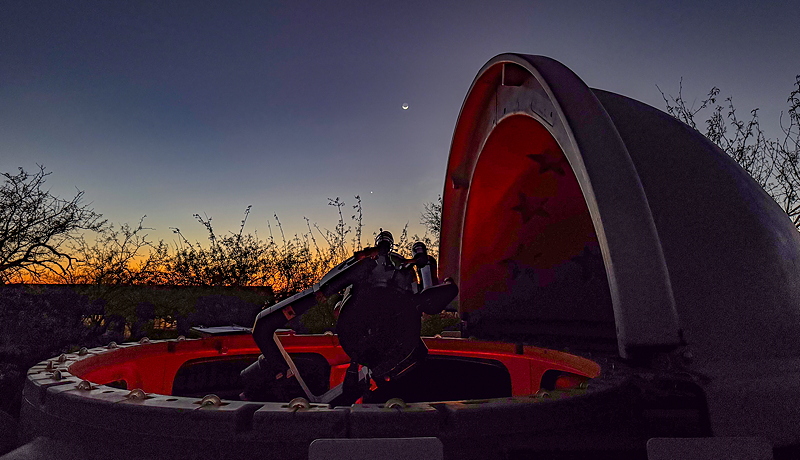
iPhone 15 Pro Max photo taken with the Camera app (1X lens) showing the telescope aimed at the Moon with Venus and the Moon with Earthshine in the western sky.
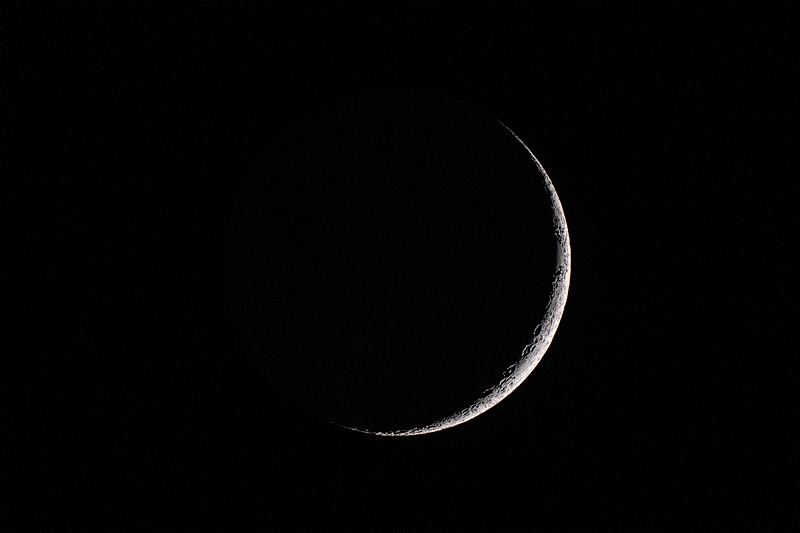
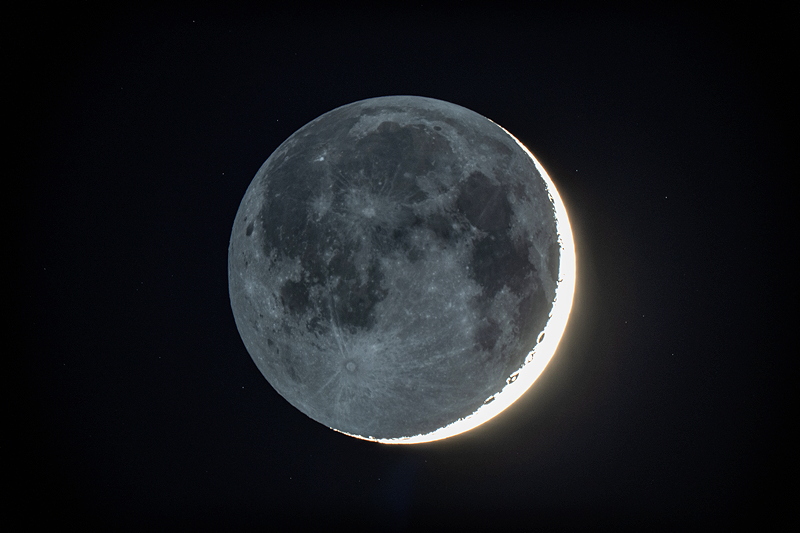
D850 DSLR images of the Moon (1/250sec, ISO 1000) and Earthshine (1 second, ISO 1000), prime focus + focal reducer.
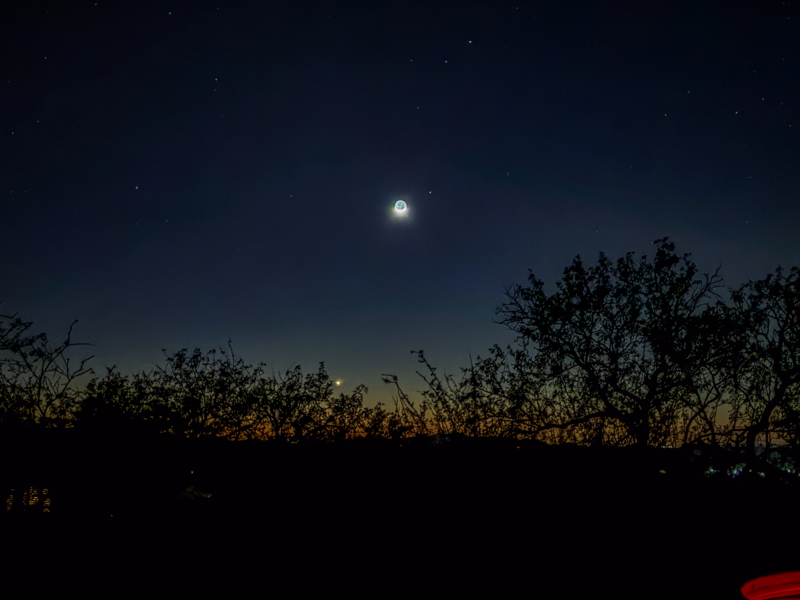
1943 MST: iPhone 15 Pro Max photo of Venus low in the western sky and the Moon with Earthshine. Taken with the Camera app (Night Mode, 3 seconds, 2X lens, handheld).
1945 MST: Back to the bench to enjoy looking at the night sky. Took this iPhone photo of M44 (the Beehive Cluster) high in the sky near the planet Jupiter (bright dot at the top). Taken with the Camera app (Night Mode, 10 seconds, 1X lens, handheld).
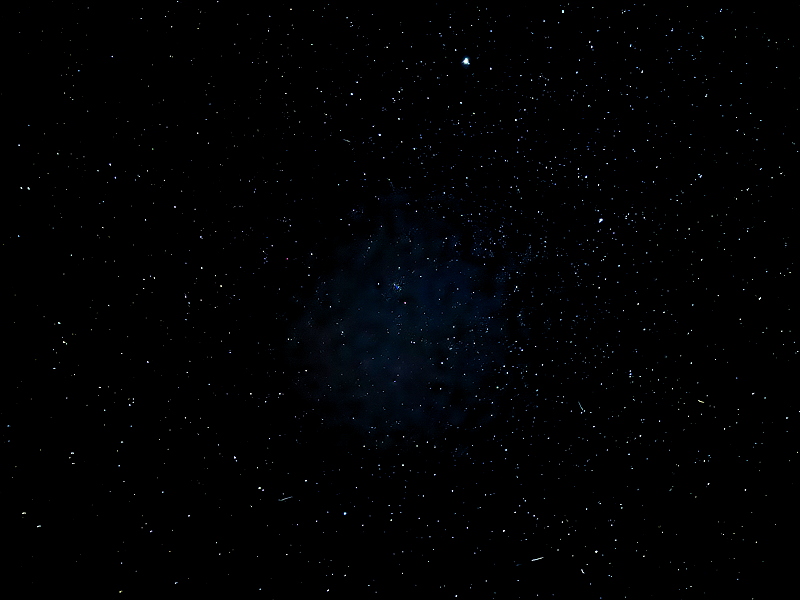
Mouseover or tap on image for label
While relaxing on the bench I did some observing using 12x50 binoculars: Moon and Earthshine, M42 (Orion Nebula), M45 (Pleiades), Double Cluster, Jupiter and three of the Galilean Moons, M44 (Beehive Cluster), and Mizar (double star in the Big Dipper).
2020 MST: Back in the observatory I began preparing to take some images for my Milky Way Globular Cluster Project. Mounted the D850 camera at prime focus, focused on Regulus, and locked the telescope mirror. Slewed to Koposov 2 (globular cluster).
2031 MST: StarLock ON.
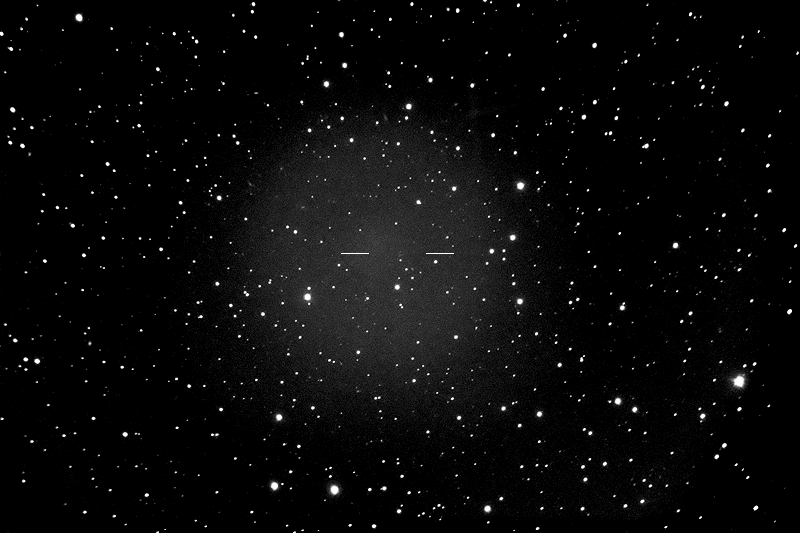
After doing several framing test exposures, I took this StarLock autoguided, 5 minutes, ISO 6400, image of Koposov 2 (Mag. +17.6).
2059 MST: Wi-Fi ON.
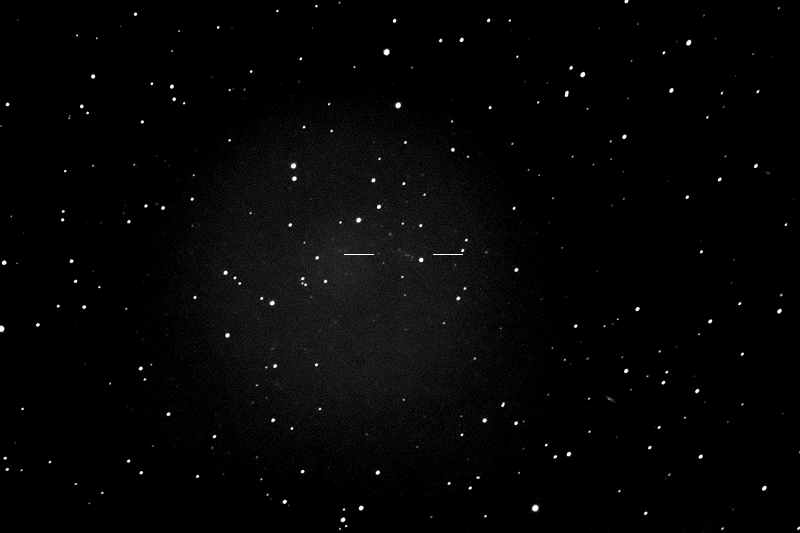
Used SkySafari 7 Pro on the iPhone to GOTO Palomar 3 (globular cluster). Took this StarLock autoguided, 5 minutes, ISO 6400, image of Palomar 3.
2119 MST: StarLock OFF, Wi-Fi OFF.
2121 MST: Back to the bench. Viewed the Leo Triplet of Galaxies, 12x50 binoculars. M65 and M66 were easy to see in the binoculars. NGC3628 (Sarah's Galaxy) was more difficult to see, even using averted vision.
2130 MST: Back in the observatory. Prepared to image the very faint Leo I (dwarf galaxy) using the iPhone 15 Pro Max. Attached the LiDAR Cover on the phone and mounted the phone on the 2" 30mm eyepiece using the 3-axis adapter.
2146 MST: StarLock ON.
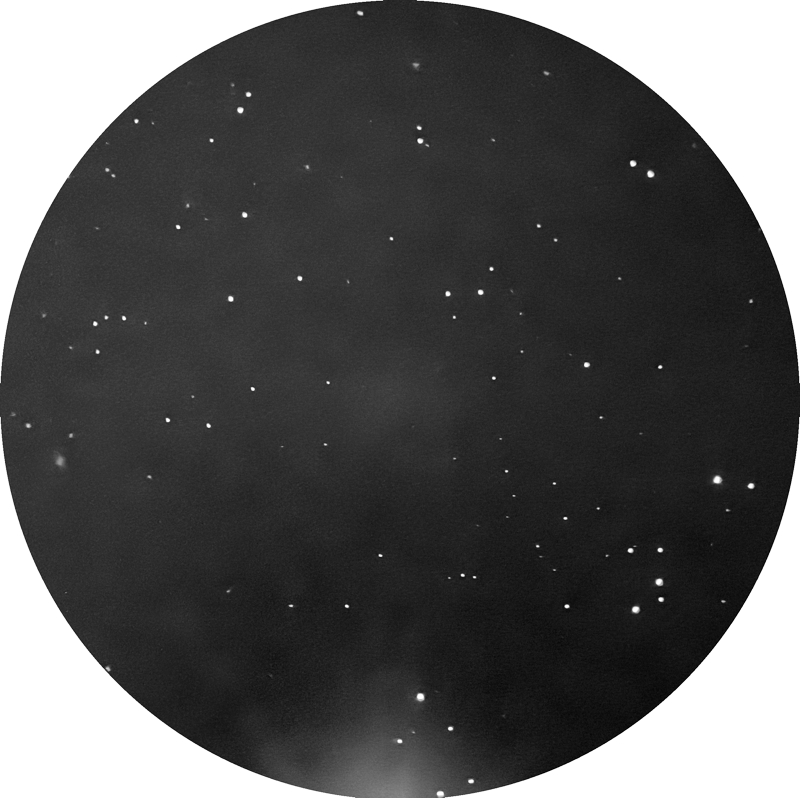
Leo I (dwarf galaxy), afocal 81X, StarLock autoguided. Taken with the Camera app (Night Mode, 30 seconds, 1X lens).
2153 MST: StarLock OFF.
2156 MST: LX600 OFF.
2202 MST: Dome ON.
2208 MST: Took a Sky Quality reading and reported the result to Globe at Night.
|
Close: Friday, 20 March 2026, 2212 MST Temperature: 72°F |
Session Length: 4h 03m Conditions: Clear, SQM 20.92 |
Comments are welcome using Email. Please read the Email Etiquette guidance.
Cassiopeia Observatory Home Page

Copyright ©2026 Michael L. Weasner / mweasner@mac.com.
URL = http://www.weasner.com/co/Reports/2026/03/21/index.html